

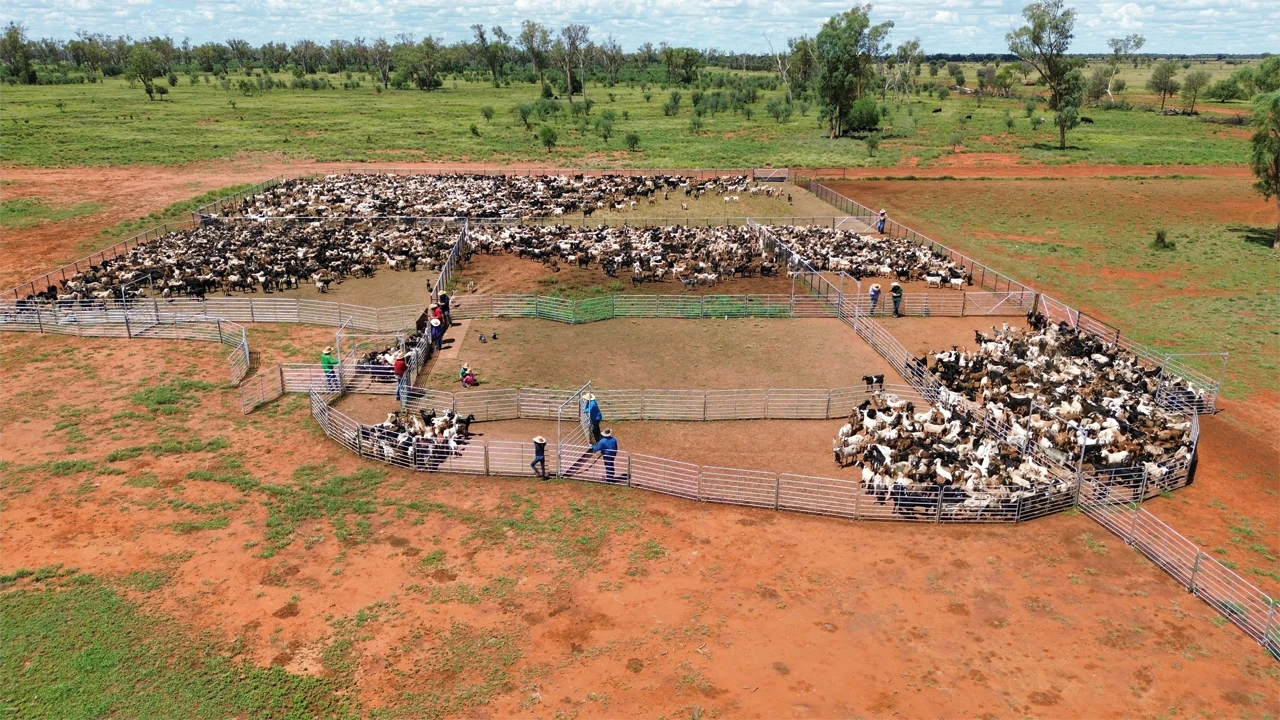
Goat meat exports have risen fourfold in the past two years and the domestic market is booming.
Story John Dunn Photo Amy Brown
Along the highways in north-western NSW and south-western Queensland, an increasing and unusual palette panorama is brightening the journey. There’s black and white, a range of browns from light tan to dark chocolate, a merger of blue and grey, a splash of cream, and even a dash of brindle and red.
They’re the mixed colours of the seemingly endless herds of goats that have made these roadsides their homes, attracted by soft green grass well-watered by the sloping camber as it collects and directs rainfall and dew away from the bitumen surface.
Nineteen goats came to Australia with the First Fleet in 1788 and were used for milk and meat, as well as beasts of burden, pulling small carts of building materials, wood and water around the shores of Sydney Cove. Some escaped into the bush, multiplied extensively and became the genesis of today’s ferals. To many they are an invasive species causing considerable ecological and environmental damage. However, with the expanding success of the goat meat industry, they are becoming increasingly viewed as favourably as the first settlers found them. They are the public face of an industry that is booming across the country, generating profit to an increasing number of farmers who have become aware of a rapidly growing demand for goat meat not only worldwide, but right here at home.
The figures are impressive. Australia is by far the world’s biggest exporter of goat meat, reaching 33 countries with 48% of the global market. Last year 61,766 tonnes worth $464 million were sold overseas – a 28% increase on the previous year and a fourfold rise since 2024. The USA, South Korea, China, Canada, Taiwan and Trinidad and Tobago are the biggest buyers.
The ferals are only minor players, contributing about 10% of the market. Most of Australia’s goat production – around 90% – comes from farms, mostly in NSW and Queensland. Bob and Amy Brown handle 20,000–30,000 rangeland goats annually across their Heather station properties near Bollon, south-western Queensland. They muster once or twice a year and truck to the abattoirs at Charleville. “Our main business is cattle – we run about 8,000 – and both goats and beef combine very well. The goats can clean up unwanted foliage, which is very helpful,” Bob says. “The goat industry is extremely positive at the moment. I can see further expansion of goat products domestically into supermarkets where it would outsell red meat. The industry needs good, consistent supply by exploring feeding programs to get lighter goats heavier and maintain production through dry periods.”
This story excerpt is from issue #170
Outback Magazine: Dec/Jan 2027


