For 10 years, architecture and design students at the University of Tasmania have created special ‘hotels’ with non-humans in mind.
Story + Photos Andrew Bain
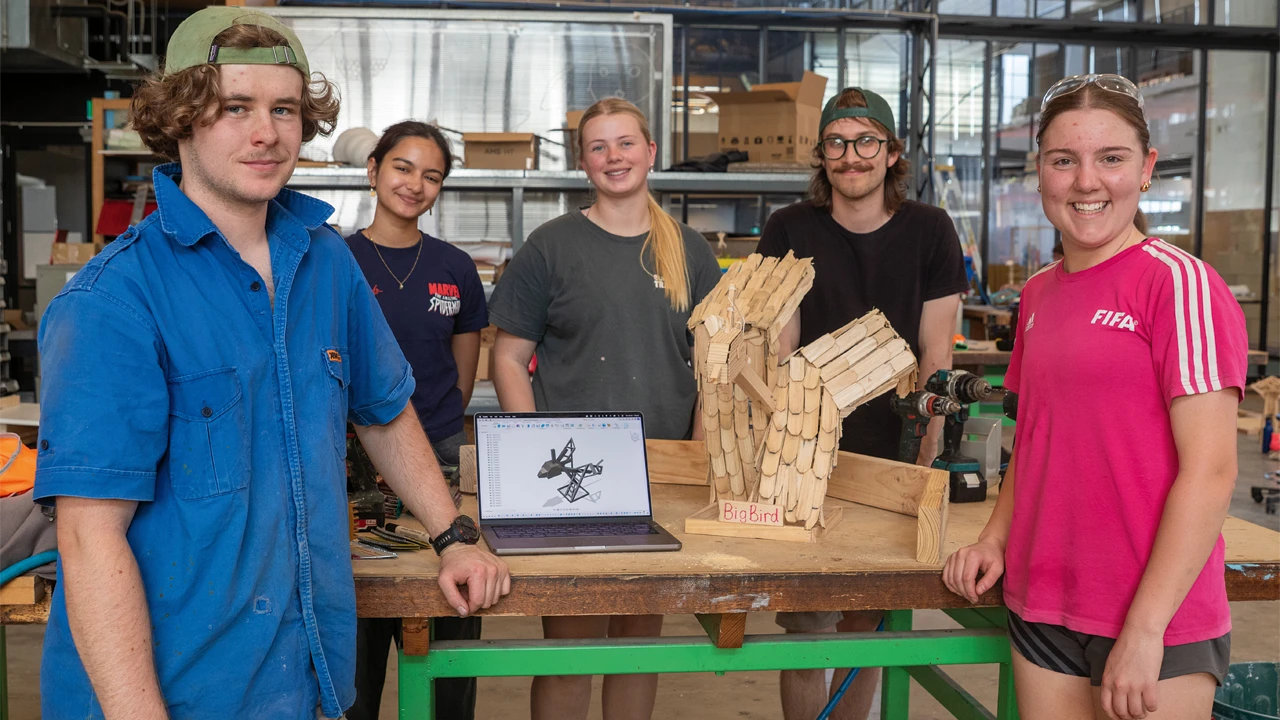
On the outskirts of Ross in Tasmania’s Midlands, there is a block of hotels like no other. Designed and built by first-year architecture and design students from the University of Tasmania, the 16 ‘Species Hotels’ on the bank of the Macquarie River look like quirky public artworks, but they’re artificial habitat for the likes of pardalotes, microbats and native bees.
“I call them sculptural habitat,” says associate professor of architecture Louise Wallis.
Species Hotel was an idea that began as a one-off project 10 years ago, with students building the shelters as part of a wider project between Greening Australia, local landowners and the Ian Potter Foundation to plant a revegetated corridor of 800,000 native trees across the Midlands. They were designed to provide shelter for small creatures while the trees were small, but the project was such a success that it was extended and has been part of the architecture and design course’s curriculum every year since.
Six of the recycled-timber hotels were built in 2026, each one designed and then constructed in the university’s Inveresk workshop by a group of four or five students. The students spend 4–5 weeks developing their designs and then three days constructing them. Louise says the construction work is an important learning process for students whose focus is design, broadening their understanding of their own creations.
“We’ve got a very strong belief that, to be good designers, students have to understand their materials and how things stand up,” she says. “This is a really powerful experience. I don’t have to tell them whether their design is going to stand up. They find out themselves whether it does.”
Past Species Hotels have found homes on the riverbank at Ross as well as in university community gardens and opposite the Agfest site at Carrick, while this year’s hotels will be installed on the grounds of Hagley Farm School, 30km west of Launceston.
This story excerpt is from issue #170
Outback Magazine: Dec/Jan 2027