A travelling crime workshop lets rural high school students practise their investigative and communication skills as they try to work out who dunnit.
Story Ken Eastwood Photo Klae McGuinness
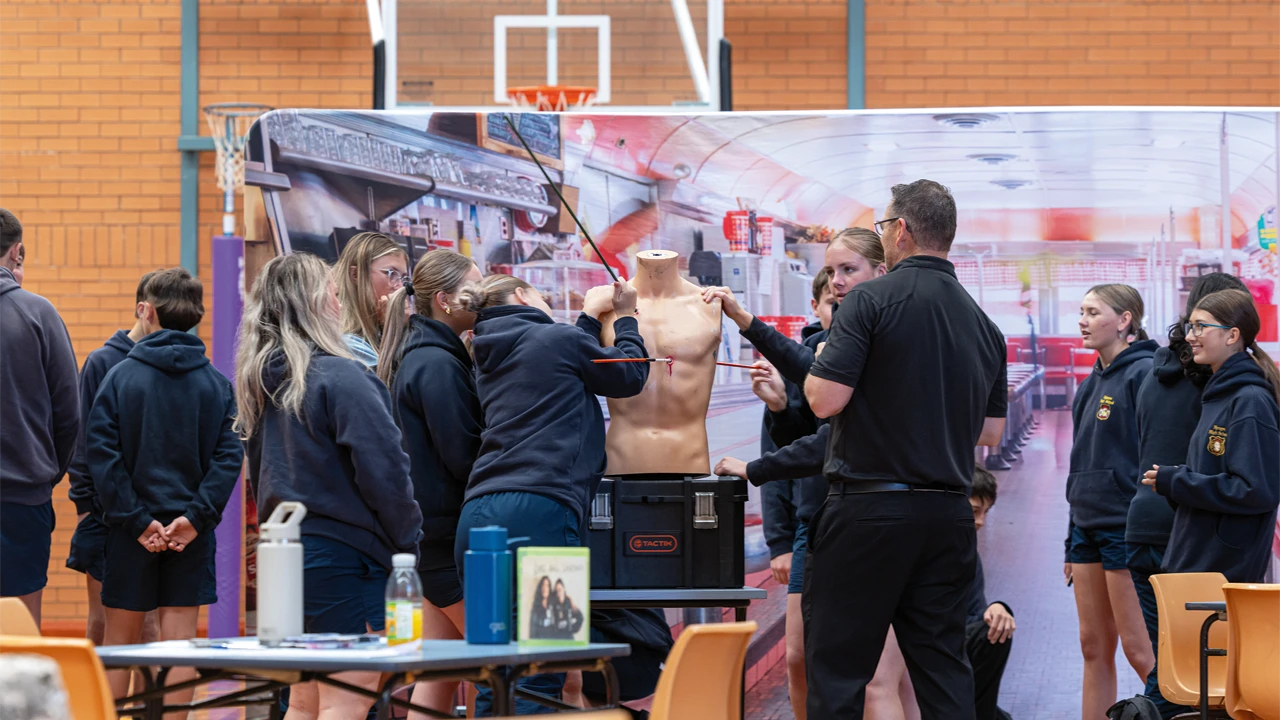
A crime scene has unfolded in Cobar High School in western NSW. It’s a break-in and there are various clues strewn around. It’s possible this isn’t just a one-time thief, but part of a crime ring. There are doughnuts for the detectives and plenty of leads to follow up.
Students crowd around – they’re interested in what has happened and are already developing their own theories.
Former detective and English teacher Luke Taylor has created this scene and two others like it as part of his travelling two-day Crime Story workshops. Primarily aimed at high school students, but able to be adapted for other audiences, the unfolding mysteries are based on real cases he was involved in and require the students to engage in critical thinking, group work, investigation, interviewing and multiple forms of communication. “School is often so pigeon-holed – you don’t get a lot of that cross-curricular thinking,” he says. “In these cases, the kids have to think, ‘What’s information and what’s just evidence?’”
Over the two days the participants challenge and change their theories as new evidence comes to light. They interview Luke, who plays various characters, and get to question who holds the power in a conversation, and what to do with that power. “I even teach them how to make arrests and I watch the behaviour as the power sort of gets to their head,” he says. “Then we talk about power imbalances in everyday conversations and how to do them better. Some of them have got this checklist of what they want to know and they stop listening to other things that might be clues. So, that’s teaching them ‘Are you really listening, or are you just working out what you’re going to say next?’”
This story excerpt is from issue #170
Outback Magazine: Dec/Jan 2027