

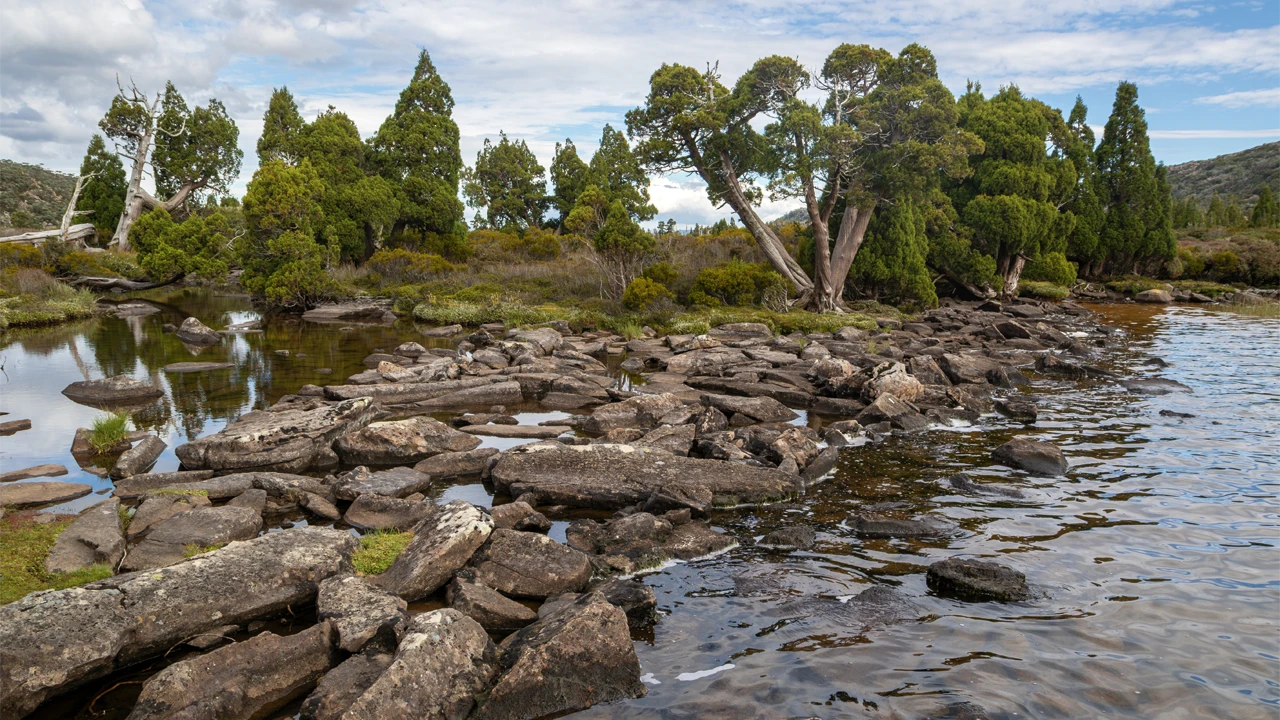
Tasmanians are being offered free native plants in a Gondwana Project program to create a large biobank of seeds and cuttings in case of a fire or other catastrophe.
Story + Photos Andrew Bain
On the slopes above the southern Tasmanian town of Margate, the paddocks of Richard Maddock’s 125ha property have, over a century of family ownership, held sawmills, sheep, potatoes and, most recently, cattle. What they’ve never had is rainforest. Until now.
Today, growing along the edge of the dry sclerophyll forest that blankets much of the hills, lines of young Tasmanian rainforest trees rise low above the pasture, including 50 myrtle beeches donated by the Gondwana Project.
Founded in 2025 by 27-year-old local scientist Harry Lush, the Gondwana Project aims to protect Tasmania’s endemic alpine and rainforest species against the already telling impacts of climate change and fire. At the project’s core is a Backyard Biobanking scheme, which hands out free alpine and rainforest plants for Tasmanians to grow on their properties, guaranteeing a source of seeds and cuttings in the event of a catastrophic fire in Tasmania’s wilderness.
“Tassie alpine plants are so distinctly different from anything else in Australia,” Harry says. “A pandani is so cool and weird, fagus is Australia’s only cool-climate deciduous tree, and pencil pines and King Billy pines are the closest relatives of the giant redwoods from the United States. It’s just crazy that we’ve got this concentrated in one little pocket on an island.
“One of my goals is to see a fagus in every second backyard in Tasmania and I’d love to see the community embrace these species as everyday gardening plants. I’d love to see the leatherwood, for instance, replace the standard rose in backyards.”
To date, the Gondwana Project has hosted four biobanking giveaway days, with Harry handing out around 200–300 plants each time. They have now been planted on hundreds of properties across the state, from pencil pines growing on a farm on the slopes of Mt Barrow, east of Launceston, to the line of myrtle beech trees in Richard Maddock’s paddocks.
This story excerpt is from issue #170
Outback Magazine: Dec/Jan 2027


