

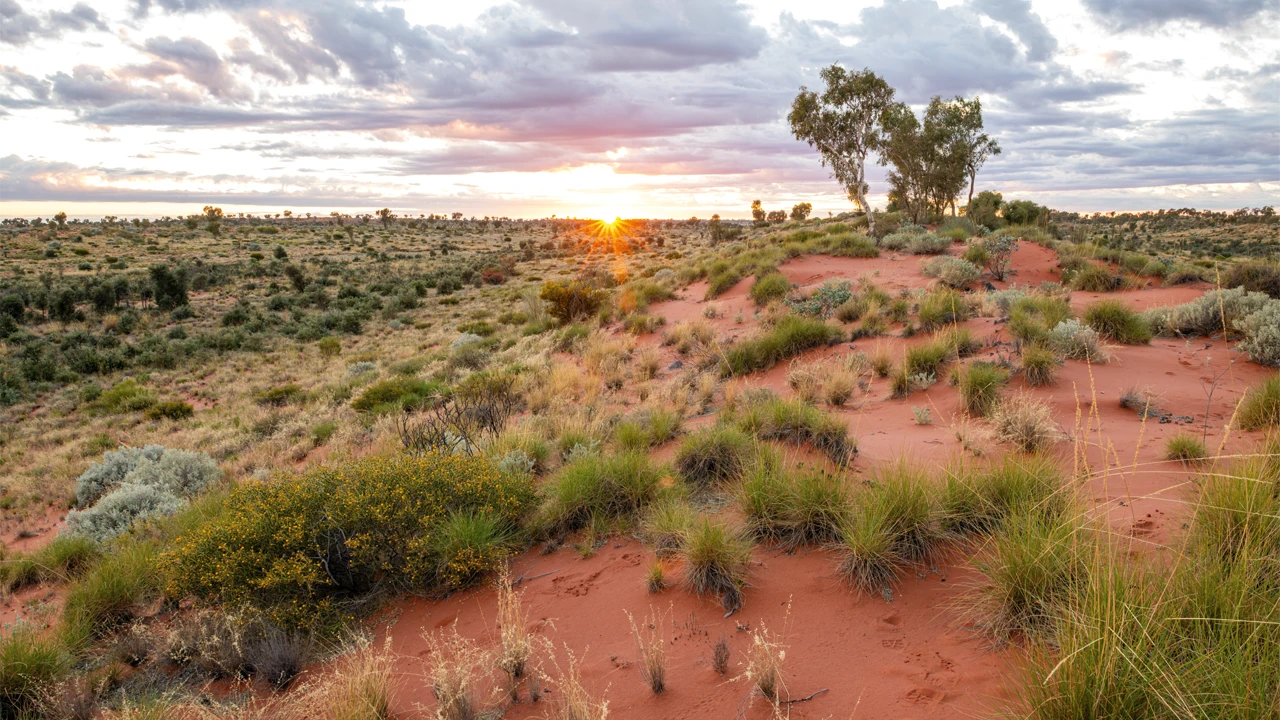
The tiny population, few rules, wild landscapes and freedom associated with Australia’s north is a lure for those who make it their home.
Story + Photos Mandy McKeesick
The north, as defined by the Federal Government’s Office of Northern Australia, encompasses “all of the Northern Territory and those parts of Queensland and Western Australia that intersect with the Tropic of Capricorn, including the Indian Ocean Territories of Christmas Island and Cocos (Keeling) Islands”. It represents 53% of Australia’s landmass, but only 5.2% of the country’s population resides here.
Townsville, Qld, is the largest city, with a population of around 190,000, followed by Darwin and Cairns (around 160,000 each). The biggest town in WA north of the Tropic is Karratha (20,000), although Broome (16,000) and Port Hedland (15,000) are nipping at its heels. In the NT, Alice Springs (28,000) and Katherine (10,000) are the only sizable centres outside the capital.
The Tropic of Capricorn is where Australia shifts from temperate to tropical zones. It marks the most southerly point where the sun is directly overhead on the summer solstice (December 22 this year). But this is a moving target. It currently resides at 23°26’ or 23°27’ south of the equator, but it wobbles about depending on the Earth’s tilt. This explains two differing signs on the Gary Highway in the Gibson Desert in WA, both proclaiming to represent the position of the Tropic.
In Alice Springs, about 30km south of the Tropic, Craig Doyle is chairing the Developing Northern Australia Conference, an annual event bringing together industry, government, First Nations peoples and the private sector. “The north is special. It’s different. It’s tougher, but the number of opportunities is ridiculous,” Craig says. “For example, there are a lot of critical minerals and key resources for energy transition in the north, but it can generally be harder for projects to get up. One reason is logistics – it costs more to get things to sites. You’ve got fewer people, which from a scale and investment point of view creates challenges. Then you’ve got the weather – summers are hot and wet, and we get cyclones and other extremes, which increase risk.
“But look at the Perdaman urea plant being built near Karratha. It’s a $6 billion project to produce 2.3 million tonnes of urea annually. In theory, it can self-sustain Australia’s urea needs for food production and that’s a transformational project for northern Australia.”
The economic wealth generated in the north, and the isolation from the political-centric south, has often fuelled discussions about secession. Historian Geoffrey Blainey and MP Bob Katter have long called for a separate state in north Queensland (mooted as ‘Capricornia’) and in WA there has been talk of The Pilbara Divide, where the mineral-rich Pilbara and Kimberley regions could cut ties with southern WA.
Craig cites obstacles to these dreams such as lack of housing, road infrastructure and maintenance, common-use development of major infrastructure (such as ports) and living perceptions. “Some won’t come to the north, because they think they’re going to be killed in a cyclone or eaten by a crocodile,” he says. “I won’t say there are no crocodiles or cyclones, but I think one or two people have died in cyclones in the past 10 years and there are no crocodiles walking down the street. For the most part it’s a real community feel. The north is one big family.”
This story excerpt is from issue #170
Outback Magazine: Dec/Jan 2027


